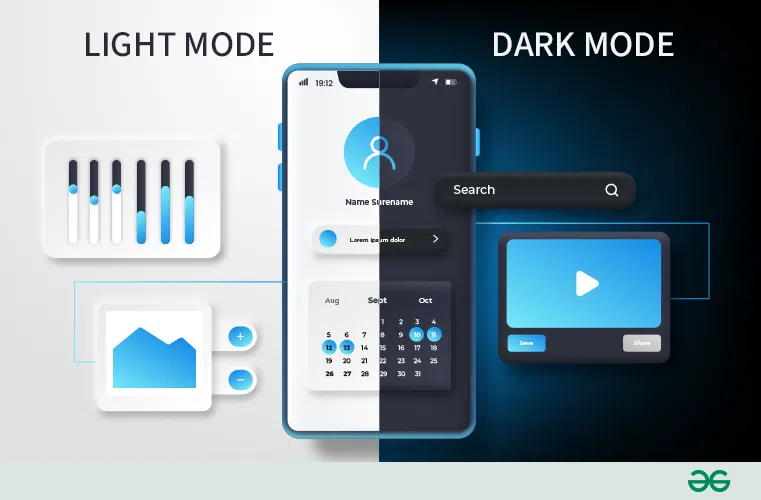
Dark mode is often promoted as a simple way to save energy—especially on phones with OLED screens, where black pixels use less power. Many websites and apps even hint that switching to dark mode is “greener.”
But this BBC Research & Development pilot study asks a smart question:
What if people change their behavior in dark mode in a way that cancels the savings?
The key idea: “rebound effect”
A rebound effect happens when a “green” feature causes people to use more of something—so the benefit shrinks or disappears.
Here, the possible rebound is simple:
Users may turn up screen brightness when viewing dark pages because dark content can feel harder to see.
And brightness is a major driver of display energy use.
What the researcher tested
Device and page
- A 2017 MacBook Pro with an LCD screen (important: LCD behaves differently than OLED)
- The BBC Sounds homepage, which supports both light and dark mode
Two parts of the experiment
- Power measurement test: The researcher measured power usage while loading the page and scrolling, across many brightness levels.
- User behavior test (10 people): Participants adjusted brightness to what felt comfortable:
- Dark mode in a dim room
- Dark mode in a bright room
- Light mode in a dim room
- Light mode in a bright room
What they found
1) On this laptop (LCD), dark mode didn’t reduce power
For LCD displays, the screen backlight is always on. That means dark pixels don’t save much, because the backlight still consumes the energy.
Result:
- No meaningful power difference between dark mode and light mode at the same brightness.
- Brightness level was the real energy driver: higher brightness = more power.
2) People turned brightness up in dark mode
This is the “dark side” of dark mode.
Across conditions, participants chose higher brightness in dark mode than in light mode—whether the room was dim or bright.
That’s critical because higher brightness means more energy use, which can wipe out any theoretical dark-mode benefit (and on LCD, there isn’t even a benefit to begin with).
Why this matters (in normal terms)
If a big part of the world still uses LCD displays (laptops, many monitors, some phones), then:
- Dark mode might not save energy
- And if users raise brightness, it may even increase energy use
So “dark mode = greener” is not a safe blanket statement.
What should happen next
The author is careful: this is a pilot study (small sample, one device type). But it raises an important warning for sustainability advice:
More research is needed on OLED devices, where dark pixels can save energy—because the brightness rebound might still reduce or cancel the benefit.
We should consider real user behavior, not just theoretical pixel-level savings.
source: https://arxiv.org/pdf/2602.17670