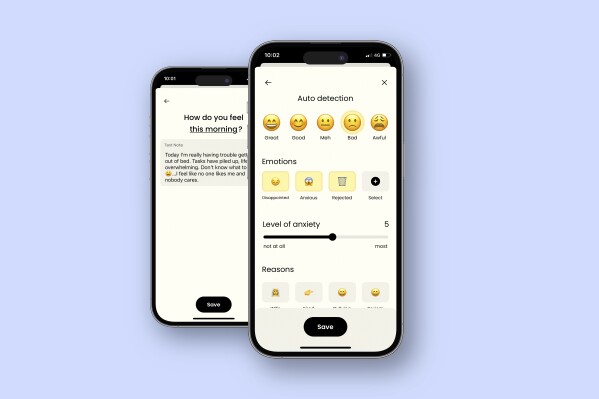
Mental health chatbots are everywhere now—from dedicated apps like Woebot to general AI assistants. But there’s a big problem behind the scenes:
We don’t have a consistent way to evaluate whether these chatbots are actually helpful, safe, and reliable.
This paper is a systematic review that looked at how researchers evaluate text-based mental health chatbots. The authors searched major academic databases and, after careful filtering, analyzed 132 studies.
What they found: evaluation is fragmented
Different studies measure different things, using different tools, over different time periods. So results are hard to compare.
To make it clearer, the review groups evaluation into three parts:
1) What do researchers measure? (Metrics)
A) Chatbot-focused metrics (about the AI itself)
These look at the chatbot’s “quality” as a system, including:
- Safety & reliability (does it avoid harmful advice? protect privacy? reduce bias?)
- Empathy and human-likeness (does it feel emotionally aware and supportive?)
- Information quality (clear, relevant, coherent responses)
- Technical performance (speed, stability, resource usage)
- Mental health expertise (does it use proper therapeutic techniques?)
B) User-focused metrics (about the person)
These look at what happens to users, including:
- User experience: ease of use, satisfaction, trust, willingness to keep using it
- Relationship quality: feeling understood, bonding, “therapeutic alliance”
- Engagement: how long users chat, how often they return, emotional involvement
- Actual outcomes: changes in mood, stress, anxiety, knowledge, behavior, sleep, daily functioning
2) How do researchers measure it? (Methods)
The paper shows three main evaluation styles:
- Automated evaluation Uses logs and text analysis (like response quality scores, safety detection, conversation length, sentiment). It’s fast and scalable—but doesn’t always reflect real human well-being.
- Standard questionnaires and mental health scales This is the most common approach. The issue: most scales were created in Western countries, with limited cultural adaptation.
- Qualitative methods Interviews, focus groups, diary studies, and analysis of chat transcripts. These reveal real user feelings and context, but studies are often small and time-consuming.
The authors argue the best practice is triangulation: combine multiple methods so you don’t rely on only one “lens.”
3) When and where are evaluations done? (Usage context)
Time matters a lot in mental health, but many studies don’t handle it well.
- Most interventions are short (often 2–8 weeks).
- Many studies measure only “right after” effects (like immediate mood), not long-term outcomes.
- Longer studies (3 months to 6 months) exist but are rare.
The authors say: if you want to claim a chatbot improves mental health, you need better follow-up and multi-time-point tracking, not just quick surveys.
Big problems the review highlights
- Small samples and short trials dominate the research.
- Western-based measurement tools are heavily used with limited cultural adaptation.
- Automated metrics don’t reliably connect to human well-being (a chatbot can score well on “text quality” but still be unhelpful—or unsafe).
- Professional/clinical competencies (like counseling skill) are often not evaluated deeply, and experts are under-involved.
The takeaway
This review is basically a call for higher standards:
Mental health chatbots should be evaluated like serious health tools: with safety checks, user outcomes, cultural fairness, and long-term evidence.
source: https://arxiv.org/pdf/2602.17669