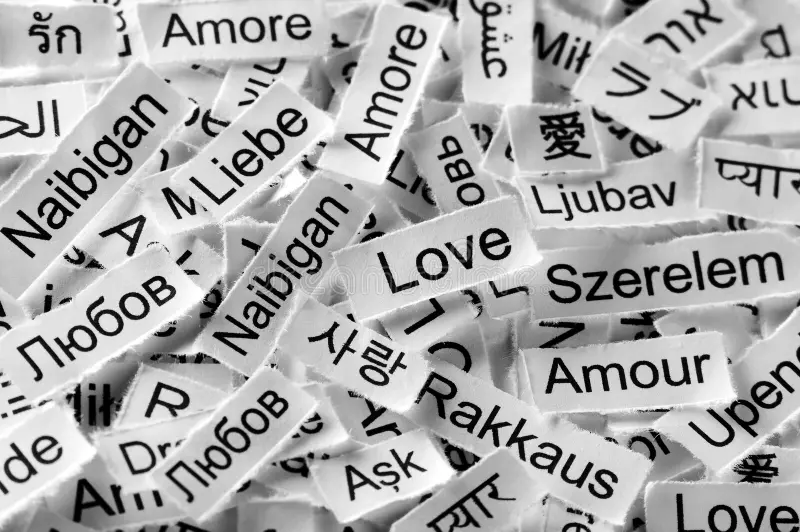
If you’ve ever copied a short text online and wondered “What language is this?”, you’re touching a real problem in AI. This task is called Language Identification (LID), and it’s a basic but important step behind many tools: spam filters, translation apps, search engines, and especially multilingual AI models.
Most language detectors work great for popular languages like English, Spanish, or French. But they often struggle when:
- the language is rare / low-resource (not much training data exists),
- the text is very short (like a tweet),
- the languages are very similar (dialects or close neighbors, like Bosnian/Croatian/Serbian),
- the writing is messy (missing accents, slang, mixed scripts).
The main idea: “Ask your tokenizer”
This paper suggests a clever shortcut: instead of building a separate complex language detector, use something AI models already have — a tokenizer.
A tokenizer is the part of a language model that breaks text into pieces (“tokens”) before the model processes it. Different languages naturally “break apart” differently.
The authors introduce UniLID, a method that:
- Uses a shared tokenizer vocabulary (like the one used by an LLM).
- Learns a simple “token frequency profile” for each language.
- For a new text, it tries to tokenize it under each language’s profile.
- It picks the language where the text gets the most likely tokenization.
In plain terms:
If a language “explains” the token splits better, UniLID assumes that’s the correct language.
Why this is useful
UniLID is designed to be:
- Data-efficient: it can learn a language with only a few examples.
- Fast and lightweight: it’s much cheaper than large neural models.
- Easy to expand: you can add a new language without retraining everything.
- Plug-and-play: it can sit inside existing AI pipelines that already tokenize text.
The results (simple takeaway)
UniLID performs competitively with popular tools like fastText, GlotLID-M, and CLD3 — and it shines where others struggle:
- Low-resource languages: it reaches 70%+ accuracy with only ~5 labeled samples per language, and 90%+ with fewer than 50 samples in their tests.
- Dialects / very similar languages: it improves performance a lot compared to a fastText baseline (reported macro F1 jumps from 0.53 to 0.72 on a dialect benchmark).
- Short and messy text: it generalizes better to informal, real-world sentences (like Tatoeba-style short data).
The big takeaway
This research shows something surprisingly practical:
Tokenization isn’t just a preprocessing step — it contains strong clues about language.
By treating token splitting as language-specific, UniLID becomes a simple, scalable way to detect languages — especially the long tail of underrepresented languages and dialects.